
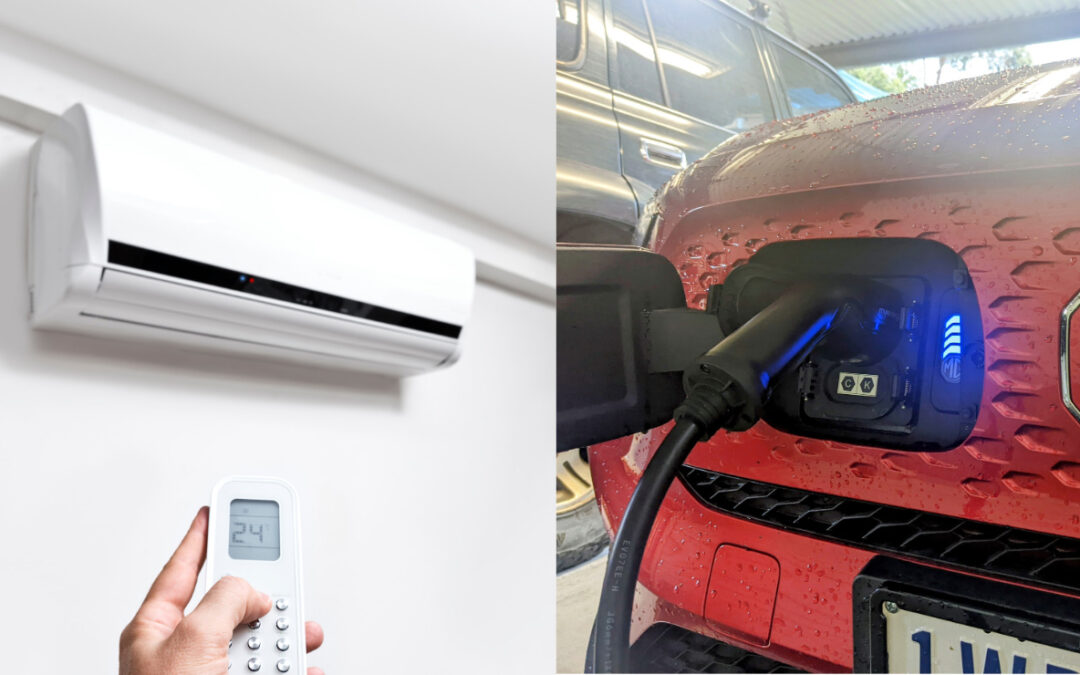
In Australian homes, split system air conditioners are commonly thought to be big on power bills. However, with the rapid rise of electric vehicles, there's been increasing discussion lately around just how expensive it is to charge an EV. When it comes to energy consumption, how do EV chargers stack up against common air conditioners? Let's break it down!
Understanding Household Energy Use
The average Australian home uses around 15-20 kWh of electricity per day. While this figure can vary based on household size, location, and habits, it gives us a good benchmark to compare against these two major energy consumers.
Split System Air Conditioners: The essential Aussie summer saviour (and winter warmer!) can be major power guzzlers. Heating and cooling combined can account for a massive 20-50% of total household energy use. Average seasonal usage for an air conditioner ranges from 500-3,500 kWh per year, with that consumption often concentrated in intense summer and winter months. During peak demand, running an aircon can easily add significant kWh to your daily usage.
EV Chargers: As more Aussies embrace electric vehicles, home charging is becoming increasingly common. A typical EV driven around 12,000 km per year will consume approximately 2,000 kWh of electricity annually for charging at home. This translates to roughly 5.5 kWh per day.
The Verdict: AC vs. EV Charger
While an EV charger certainly adds a substantial amount of energy consumption to a
household over the year, air conditioners, particularly in regions with extreme temperatures like ours in The Yarra Valley, can still be the biggest single energy drain on a daily basis during peak seasons. Their demand for power is often more concentrated and intense for shorter, but critical, periods. Crucially, the cost of EV charging can be significantly reduced. Unlike air conditioners that often need to run during peak demand times (hot afternoons/evenings) when electricity is most expensive, EV charging offers far more flexibility by leveraging solar power and off-peak tariffs.
Smarter Energy Habits for Your Home
To keep your overall energy consumption in check and your bills lower, consider these practical tips for both of these major power users:
FOR AIR CONDITIONERS
- Choose Efficiency: When buying new appliances, always look for the Energy Rating Label. More stars mean greater energy efficiency and lower running costs over the appliance's lifetime.
- Optimize Usage: Set your air conditioner between 24-26°C in summer and 18-20°C in winter. Every degree hotter or cooler can increase running costs by 5-10%.
- Maintain Regularly: Clean your AC filters every few months to ensure it runs efficiently and effectively.
- Enhance Home Insulation: Seal draughts around doors and windows. Consider insulation upgrades for walls, ceilings, and floors to reduce the need for constant heating and cooling.
FOR EV CHARGERS:
Harness the Sun: The most impactful way to reduce EV charging costs and environmental footprint is by charging your EV during the day using your solar panels. This maximises the use of free, clean energy generated from your rooftop, significantly reducing reliance on grid power and potentially saving you hundreds of dollars annually.
- Smart Charging: If daytime solar charging isn't always possible, utilise
- Smart charging features (often available with modern EV chargers) to schedule charging during off-peak electricity hours when rates are lower.
If you’re looking to make energy efficient improvements at your home, our team can help. Give us a call or fill out a quote request form today. Contact Us
Recent Comments